
The Rise of Urban Contrast Therapy: Wellness Trend or a Cry for Something Deeper?
Our newfound devotion to heat, cold and voluntary suffering says something about the way we live. Maybe the answer isn't a colder plunge. Maybe it's getting out of town.
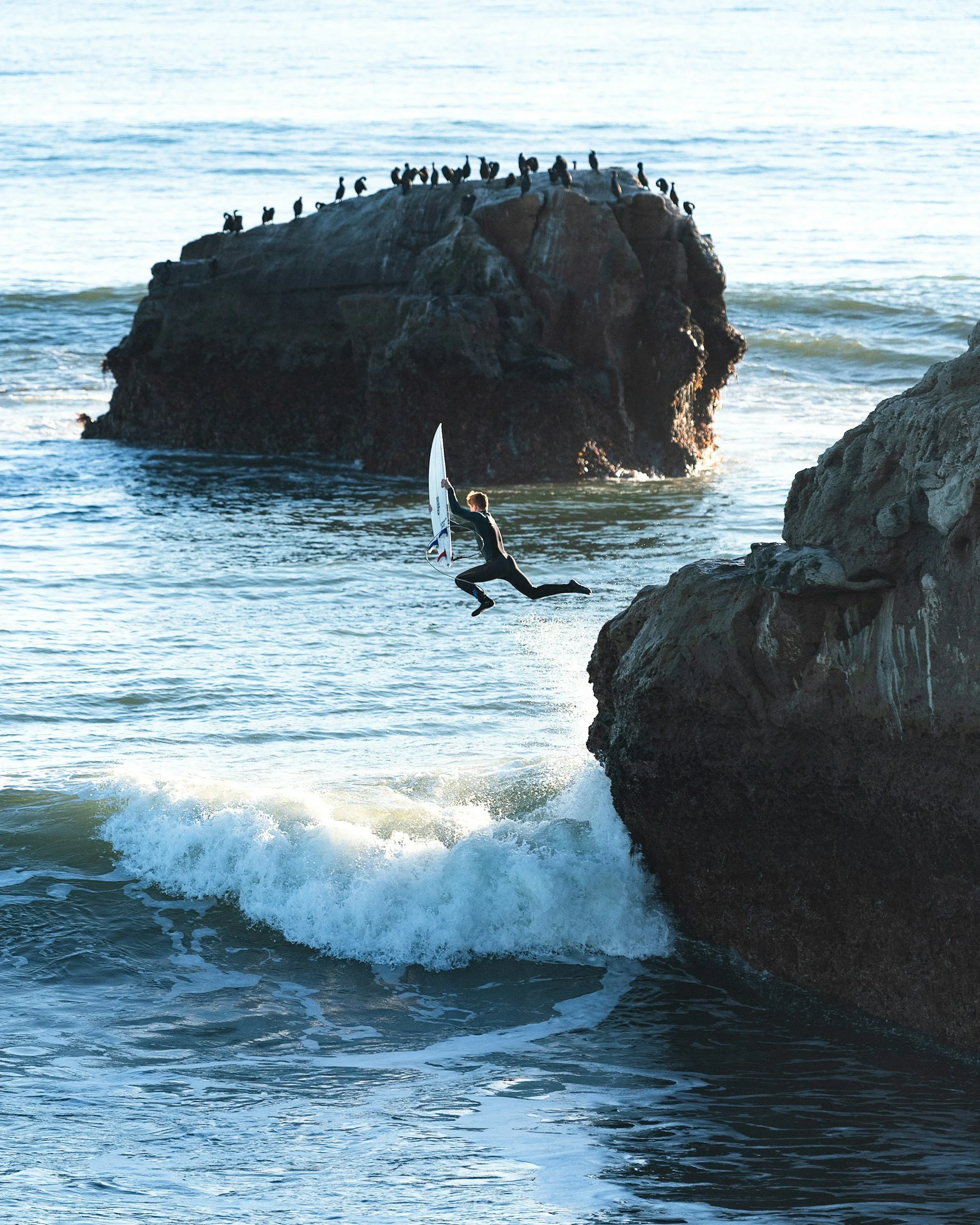
Cold-plunge with a difference.
There is no doubt about it. The sauna-and-cold-plunge pairing is having its moment. For the city dwellers among you - London, you know who you are - who have bought into the gospel of contrast therapy and now willingly submit yourselves to ritualised extremes of heat and cold in the name of wellness, you will already know the problem.
Trying to book a decent sauna session less than a week in advance has become a competitive sport.
A strange, steamy little Hunger Games.
With better towels.
Across the country, cold-water immersion has somehow completed the journey from slightly unhinged Nordic ritual to perfectly acceptable Tuesday-night activity. Cedar boxes have appeared beside canals. Stainless-steel tubs sit beneath railway arches. People who once complained when the shower ran cold now voluntarily climb into refrigerated water and pay good money for the privilege.
And, frankly, we get it.
We love the heat. We love the cold. We respect the madness.
But somewhere between the third guided breath and the laminated instructions explaining exactly how many minutes you should spend at precisely how many degrees, a question starts to form.
What are we actually looking for here?
THE CITY DISCOVERED HOT AND COLD
The accepted explanation is physiological.
Heat. Cold. Repeat.
The promise of recovery. A clearer head. The post-plunge buzz. A nervous system apparently being put through something resembling an MOT.
The science is interesting, although — as science has an irritating habit of doing — somewhat less evangelical than Instagram.
Research into cold-water immersion shows some promising results around things such as stress, sleep and perceived quality of life, but we're still a long way from being able to declare refrigerated water a miracle cure for modern existence. Studies remain relatively small, protocols vary wildly, and it isn't always clear how much of the benefit comes from the cold itself and how much comes from everything surrounding it.
Which, to us, is where things start getting interesting.
Because perhaps the important part isn't just the temperature.
Perhaps it's what happens when normal life gets interrupted.
MAYBE IT ISN'T THE PLUNGE
For anyone living in a busy city, life has developed a peculiar background frequency.
Deadlines. Traffic. Inbox. Phone. Flat white. Notification. Meeting. Another notification. Someone on an electric bike travelling at 38mph in a pedestrian zone.
And always, somehow, the low-grade suspicion that you're slightly late for something.
Cold water deals with this remarkably efficiently.
Get into genuinely cold water and, for a little while at least, the internal monologue loses the argument.
Your brain has other priorities.
Breathe.
Stay calm.
This is cold.
Everything else can wait.
Perhaps that is part of what people are travelling across cities in Lycra and oversized puffer jackets to find: a clean interruption.
And perhaps there's another part too.
You meet friends somewhere that isn't another pub. You sit together in the heat, slightly pink and considerably less guarded than usual. You talk. You sweat. Then you cheer one another into a metal tub of refrigerated punishment like a group of deranged but fundamentally supportive villagers.
To risk going the full steamy hog here, maybe some of this is about connection.
Real, uncomplicated connection.
Take away the screens, the clothes, the noise and the performance, then give a group of people something mildly uncomfortable and physical to do together.
Things have a tendency to become rather human rather quickly.
THE PROBLEM COMES AFTERWARDS
The downside of the urban sauna is what happens approximately eleven seconds after you leave.
One minute you're post-plunge and glowing. Serene. Reborn. Quietly convinced that you've finally cracked the operating system of modern life.
Then the door opens.
Bus.
Horn.
Lime bike.
WhatsApp.
Deliveroo rider.
Someone walking directly towards you while staring at TikTok.
The calm you spent an hour carefully constructing is mugged on the pavement before you've even found your AirPods.
And maybe that tells us something.
Perhaps if what you're searching for is genuinely a reset, the environment matters too.
Research into so-called blue spaces — oceans, rivers, lakes and coastlines — increasingly points towards a relationship between time around water and improved wellbeing, although, again, the mechanisms are complex. Nature, movement, social connection, attention and simply getting away from normal surroundings may all play their part.
In other words: the sea doesn't need to take all the credit.
It just needs to be there.
THE ATLANTIC IS A TERRIBLE WELLNESS STUDIO
There are no eucalyptus-scented towels.
No mood lighting.
No refrigerated face cloth waiting for you afterwards.
The temperature setting is unreliable.
The floor is mostly sand.
And occasionally the receptionist is a herring gull attempting to steal your pasty.
But the Atlantic does offer something difficult to reproduce inside a beautifully tiled room.
Scale.
Weather.
Movement.
Uncertainty.
Cold-water surfing in Cornwall isn't simply a more elaborate way of taking an ice bath. You're reading swell, watching the horizon, paddling, falling off, laughing at yourself, trying again and occasionally standing on a moving piece of ocean for several glorious seconds.
Your attention has somewhere very specific to be.
Here.
Yeah. Right here.
HERE.
Not tomorrow's meeting.
Not the email you haven't answered.
Here.
On the wave coming towards you.
There is a reason a cold-water surf retreat in Cornwall feels different from booking another wellness treatment. The cold is only part of it.
The ocean is the setting.
Surfing provides the challenge.
The coastline provides the distance.
And the people around you provide the bit that gets suspiciously close to community.
HEAT FEELS BETTER AFTER SALT WATER
None of this means we have abandoned the sauna.
Absolutely not.
We are not animals.
Few things in life feel as satisfying as stepping out of a cold Cornish sea, removing a wetsuit with all the elegance of someone escaping industrial clingfilm, and getting properly warm again.
The heat lands differently when it has been earned.
Which is why sauna and cold water make such natural companions on the coast. Not because we believe there is a perfect wellness equation involving eight minutes at one temperature followed by ninety seconds at another.
But because cold water, movement, warmth and rest feel bloody good together.
Particularly when nobody is rushing you back onto the Northern line afterwards.
MAYBE THE RESET IS BIGGER THAN THE PLUNGE
So if you're one of the growing band of contrast-therapy converts chasing the hot-cold high, perhaps keep going.
Book the sauna.
Get in the tub.
We probably will too.
But if there is a deeper thing underneath it — the pause, the physical challenge, the clearer head, the strange camaraderie of doing something difficult with good people — perhaps the stainless-steel plunge is only giving you a small taste of what you're actually after.
Maybe you don't need a colder bath.
Maybe you need a bigger horizon.
Time beside the ocean.
Salt in the air.
Salt in your hair.
Cold water without the studio lighting.
The original plunge pool.
The Blue Juice.
And a few days where normal life is allowed to wait on the other side of Cornwall.
At Peak, cold water isn't a treatment and the Atlantic isn't a wellness hack. It's simply where a lot of the good stuff begins — surfing, sauna, recovery, proper food, fresh air and time with people you'd probably never otherwise have met.
If that sounds like your kind of reset, take a look at what we get up to on a Peak surf retreat.
© 2026 Peak Boutique Surf Retreat. Words by Samuel Evans.