
No Bad Weather. Only Bad Gear.
After a summer of record-chasing heat, Cornwall is beginning to turn. Good. The sun is lovely. So is the rain. The trick is having the right jacket — and remembering that the weather was never background scenery in the first place.
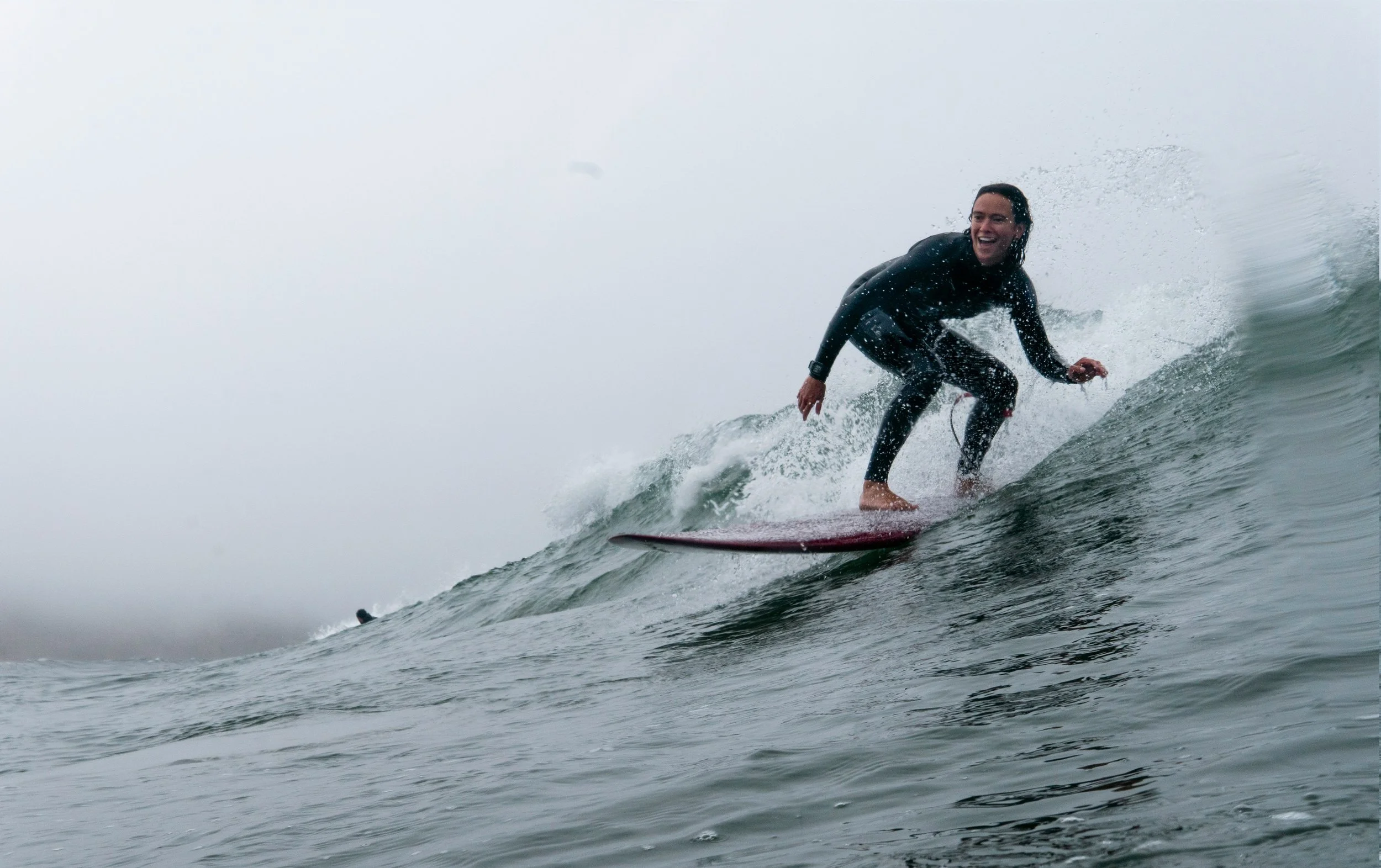
Smiling through the autumnal foggy dew.
It has been one hell of a summer.
The kind where England starts looking suspiciously Basque, the grass is singed, boardshorts and bikinis become legitimate daily attire, and anyone who skipped the low-budget airline hordes starts feeling faintly smug about choosing the cosmic coastline instead.
At the time of writing, 2026 is still on course to become the warmest UK summer on record.
This is not necessarily something to celebrate. Record-breaking warmth is record-breaking warmth, and we should probably resist treating a changing climate as an unexpectedly generous tourism campaign.
But the sun has been glorious. Both things can be true.
And now Cornwall is beginning to move again.
The mornings feel different. The evenings are pulling themselves in. Atlantic systems are beginning to appear on weather charts with that familiar swirling magic.
Autumn is somewhere offshore. And, frankly, we are quite excited about it.
SUMMER HAS BEEN SHOWING OFF
Summer Cornwall is extraordinarily easy to love.
Blue sky. Long evenings. Warm sand. Friendlier waves rolling towards shore. Fish and chips eaten outside without having to pin the napkins down with your pint.
But Cornwall was never really designed to behave itself for long.
This is a peninsula pushed into the Atlantic. Swell travels thousands of miles before arriving at granite headlands and sandy bays. Wind changes direction. Clouds arrive sideways. Ten minutes of biblical rain can be followed by sunlight that makes the whole coast look like somebody has tampered aggressively with the saturation.
Unstable. Temperamental. Occasionally inconvenient.
Also precisely what makes the place so bloody compelling.
THE WEATHER IS NOT BACKGROUND SCENERY
Modern travel has developed a curious obsession with removing uncertainty.
We check the forecast fourteen days ahead. Then ten. Then seven. Then hourly.
Eventually we arrive somewhere beautiful and spend half the trip checking whether it intends to remain beautiful according to the terms previously agreed.
Cornwall is not particularly interested in this arrangement.
The coastline moves. The tide moves. The swell moves. The wind shifts.
And if you spend enough time here, something useful happens.
You stop feeling like a spectator watching nature perform and start feeling like a participant in it.
You notice the wind because you're standing in it. You notice the tide because the beach you walked down three hours ago has disappeared.
You notice the shower approaching because the horizon turns charcoal and somebody says, rather optimistically:
“Think it'll miss us.”
It does not miss you.
You get wet. Then the sun comes out. Life continues.
Bloody compelling.
METEOROLOGICAL CONTRAST THERAPY
We have previously written about contrast therapy.
Hot sauna. Cold plunge. Hot. Cold.
Repeat until spiritually cleansed.
Cornwall offers much the same service, only nobody appears to be controlling the thermostat.
Call it contrast therapy on a meteorological scale.
One minute you're drinking coffee outside whilst wearing linen. Twenty minutes later you're pulling up a hood as rain moves horizontally across the landscape.
Then you're in the Atlantic. Then the sun comes out. Then you're in the sauna.
There is something strangely refreshing about surrendering to it.
Not defeating the weather. Not enduring it.
Being in it.
Feeling rain in the same way you feel sunshine. Smiling in the cold. Taking ridiculous pleasure in warmth when it returns.
Comfort and refreshment stop being permanent conditions you demand from the world and become things you notice.
FOUR SEASONS. FOUR DIFFERENT CORNWALLS.
Which brings us to the question we get asked repeatedly:
What is the best time to surf in Cornwall?
There isn't one.
Cornwall doesn't really have a surf season. It has surf seasons.
And each comes with its own version of the place.
SPRING — MARCH TO MAY
Spring is Cornwall shaking winter off and remembering what longer days are for.
You can get proper Atlantic swell, smaller clean days and the occasional afternoon that has everyone sitting outside in T-shirts pretending February never happened. Conditions vary, which means there are plenty of opportunities to find something suited to the group — from forgiving beach-break waves for beginners to punchier days for surfers looking to progress.
Surf: a varied mix of playful waves and more energetic Atlantic swell. Increasing daylight and quieter beaches make it a lovely time to learn, progress and generally get your wave count moving again.
Neoprene levels: broadly 4/3mm full-suit territory, with a warmer 5/4mm and perhaps boots earlier in spring if you feel the cold. As May arrives, things begin to soften considerably.
Pack: warm layers, a waterproof jacket, trainers or boots that tolerate mud, swimwear, comfortable post-surf clothes and — never underrated — dry socks.
Then one warm May afternoon appears and everyone immediately declares summer.
SUMMER — JUNE TO AUGUST
Long days. Warmer water. Smaller, playful surf.
Summer is naturally brilliant for beginners: friendlier waves, long daylight hours and plenty of opportunities to get comfortable in the water. Developing surfers still get lots to work with, and the Atlantic is perfectly capable of slipping the occasional bigger swell through just to keep everyone interested.
Surf: generally smaller and forgiving, with loads of fun sessions and regular opportunities for beginners to build confidence and intermediates to work on turns, positioning and catching more waves.
Neoprene levels: usually 3/2mm full-suit territory, although people who feel the cold may still favour a 4/3mm and warmer surfers sometimes go lighter during settled spells.
Pack: swimwear, shorts, T-shirts, light layers, trainers, sandals and a lightweight waterproof.
Yes, still bring the waterproof. This is Cornwall, not Mykonos.
AUTUMN — SEPTEMBER TO NOVEMBER
Now we're talking.
The sea hangs onto much of its summer warmth while the Atlantic begins sending more regular swell towards the coast. Beaches breathe again after August. Early mornings can still bring beautiful light winds and sunshine. You get the odd wet day, the odd glorious one, and plenty that manage both before lunch.
For beginners, there are still plenty of sheltered beach-break options and smaller days to learn on. For developing and experienced surfers, the increased variety means more opportunity to start exploring what different swells, winds and beaches actually do.
Surf: increasingly consistent Atlantic swell, warmer water lingering from summer and plenty of choice. A particularly good period for learning how to read conditions rather than simply turning up at the same beach every time.
Neoprene levels: early autumn can remain 3/2mm territory, moving gradually towards a 4/3mm full suit as the air and water cool.
Pack: proper waterproof, warm mid-layer or fleece, beanie for cooler evenings, comfortable trousers, sturdy footwear and plenty of dry clothes.
September and October can be magnificent. So can the other ten months.
Just differently.
WINTER — DECEMBER TO FEBRUARY
Winter is when the Atlantic becomes particularly interesting.
Yes, larger swells and stronger onshore winds happen. But Cornwall has a useful trick up its sleeve: it has a lot of coastline facing a lot of different directions.
If you know where to go — or you're with somebody who does. Cough, cough. — winter can produce some almighty waves. Find the right angle of coast, the right shelter and the right offshore wind and Cornwall is capable of genuinely world-class surf.
And that doesn't mean winter belongs only to experts.
There are still loads of beach breaks across the north and south coasts that, on the right days, give beginners and intermediates opportunities to learn, progress and keep their winter wave count healthy. The useful bit is simply knowing which beach suits the conditions.
Surf: an abundance of Atlantic swell and enormous variety. Experienced surfers can hunt exceptional conditions; beginners and progressing surfers can make use of the more sheltered corners and manageable beach-break days.
Neoprene levels: typically 5/4mm winter wetsuit territory, often with boots, gloves and a hood depending on the day and how warm you like to be.
Pack: proper waterproof jacket, warm layers, fleece, beanie, sturdy footwear and more dry clothes than you think you'll need.
Then find a pub with a fire. Sorted.
Neoprene is personal. Session length, wind, water temperature and whether you were apparently born with antifreeze in your bloodstream all matter.
And if you're joining Peak, boards and wetsuits are provided anyway.
Which makes what to pack for a Cornwall surf trip considerably easier.
PACK FOR CORNWALL, NOT FOR THE WEATHER APP
There is an old Scandinavian line repeated relentlessly in outdoor circles:
There is no bad weather. Only bad clothing.
Which is irritatingly smug. And also mostly true.
The aim isn't to armour yourself against Cornwall. It's to remove the stupid reasons for staying indoors.
A rain jacket changes rain considerably. A decent wetsuit changes cold water considerably.
Dry socks may be one of civilisation's greatest achievements.
Once you're warm enough, dry enough and properly equipped, a surprising amount of allegedly “bad weather” becomes just...
Weather.
THE VOLATILITY IS THE LUXURY
There are places you visit because you know exactly what you're going to get.
Palm tree. Blue sky. Thirty degrees. Repeat.
Nothing wrong with that.
Cornwall offers something else.
Its ability to give you the reset you've been asking for is in its variety.
A glassy morning surf followed by sideways rain. A grey dawn turning electric blue. An offshore breeze disappearing and returning from somewhere entirely unhelpful.
The place changes while you're standing in it.
You don't simply consume the landscape. You react to it. Adapt to it. Move through it.
The first proper autumn swell. The first day the fleece comes back out. The first post-surf sauna where stepping into the heat feels less like an amenity and more like a minor religious experience.
Participation.
Not observation.
GET OUT IN IT
Maybe this is the mistake we've made with weather.
We treat sunshine as something we experience and rain as something that happens to us.
One gets photographed. The other endured.
But both are part of being somewhere.
So we're not mourning summer particularly hard.
We loved it.
We swam late. We surfed in sunshine. We ate al fresco.
Now something else is coming.
Quieter beaches. Bigger horizons. Atlantic swell.
Rain against windows. Cosy kitchens. Cold cheeks.
A different Cornwall.
Not better. Not worse.
Moving.
And maybe actually feeling that movement — rather than watching another season disappear through an office window — is part of what getting away was supposed to be about.
Feel the rain. Feel the sun.
Smile in the cold. Delight in the warmth.
Wear the right jacket.
And be compelled to get amongst it.
If that sounds like your kind of Cornwall, take a look at what we get up to on a Peak surf retreat.
© 2026 Peak Boutique Surf Retreat. Words by Samuel Evans